
Co-production Needs to Benefit Everyone
Joel Chalfen, Project Officer (Audience Development & Community Engagement), SHARE Museums East
The launch on July 1st of the Museum Association’s new vision for the sector, Museums Change Lives, was both a statement of position and a challenge. A statement of position inasmuch as it consolidates, at a specific historic juncture, a lot of debate over the last thirty years about the social role of museums; and a challenge in that, despite thirty years of debate and much good practice to inform it, working with communities and for the social good remains a controversial and difficult area of activity for the heritage sector.
At a time of cross-sector funding cuts and increased pressure on public services to meet the needs of their communities, the MA’s vision is taking an opportune moment to champion the argument that the benefits of cultural work extend to social needs. It attempts to put museums on an equal footing with ‘frontline’ services as far as their social value. Museums Change Lives focuses on three areas of impact: wellbeing; creating better places; and inspiring people and ideas. It captures the museum’s effects on individual health and self-esteem; on environmental change and community living; and on knowledge, ambition and creativity.
The package reiterates formulations of a decade ago. But now, in an era of shrinking resources, looks more like a bid for survival than a rebranding exercise. Perceived as a social service, museums might prove more robust: establishing sustainable partnerships and embedding themselves in the life of their communities.
But where austerity equally applies to the heritage sector as to the social services it is provoking urgent responses from those who want to ensure the sustainability of the sector’s specialist cultural contribution as conserver and curator. The reaction of some to the Museums Change Lives statement is quite simply that social work is nothing to do with museums. Their fight is to secure funding without having to change the terms on which professionalism is acknowledged and respected. This is the rearguard response to any further drive towards social responsibility as a definition of heritage’s work.
That the two positions remain at loggerheads emphasises above all a failure to derive a language in which social benefit and specialist cultural expertise can be talked about together. Much of this is to do with the expectation of measuring social benefit for non-experts to appreciate value as opposed to allowing experts to regulate themselves in terms of quality, knowledge and critical reflection. However, there is at the same time an absolute need for curators and conservators to recognise that talking about social benefit is not to belittle or shift the emphasis in the search for quality in their own work.
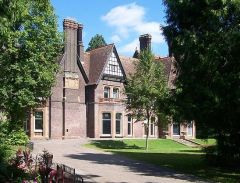
Wardown Park Museum
On July 4th, the first meeting was held of a new SHARE Museums East cohort focusing on co-production and working with communities. Bringing, in the first instance, 4 museums and 2 museum services together, the group will be there to support members through their community-based projects, providing a forum for constructive criticism, sharing experiences and a talk-shop for issues and worries. At this first meeting, it was evident that, on whatever scale the project may be running – and there is a range from the wholesale re-design of Wardown Park Museum, Luton to a community cabinet in the Museum of Cambridge – the issues remain the same. Issues of communication, politics, competency, purpose and expectation are constant areas of concern and particularly so when engaging members of the public in the work of museums.
But key to these issues is convincing people on all sides, both potential participants from the community and paid staff and volunteers within the museum, that there should be no pre-judgement about what museums are for. It is to convince everyone that the benefits of engaging with objects and stories of the past are theirs to be discovered in conversation with others. There is the challenge of encouraging members of the public to see the work of museums as a process that can include them and their stories and enhance their lives in terms of shared experiences and personal development. And there is the challenge of asking museum workers to buy into community projects and to share their knowledge in new ways. For those who prejudge that a co-produced exhibition will lack quality, the challenge is for them to get involved and make their professional expertise the insurance against this. Genuine participation does not mean the removal of the curator, it means the sharing of knowledge and authority to present the most informed and nuanced interpretations, learning and openness on all sides.
The plan for the Co-Production Cohort is to grow a collection of case studies that reflect the diversity of community-engaged projects. From this collection, there should be a helpful toolkit which highlights techniques of engagement as well as project outcomes. But also we hope we will help to inform an understanding of the benefits of this kind of work that reflects both the social value argument and the need to sustain and support the traditional expertises in the sector. Capturing the successes and failures of co-produced work will hopefully help to deepen our understanding of how the benefits are shared across all involved – changing lives but also strengthening museums.
For more information on the SHARE Museums East co-production cohort, please contact Joel at [email protected] / 01603 228925


